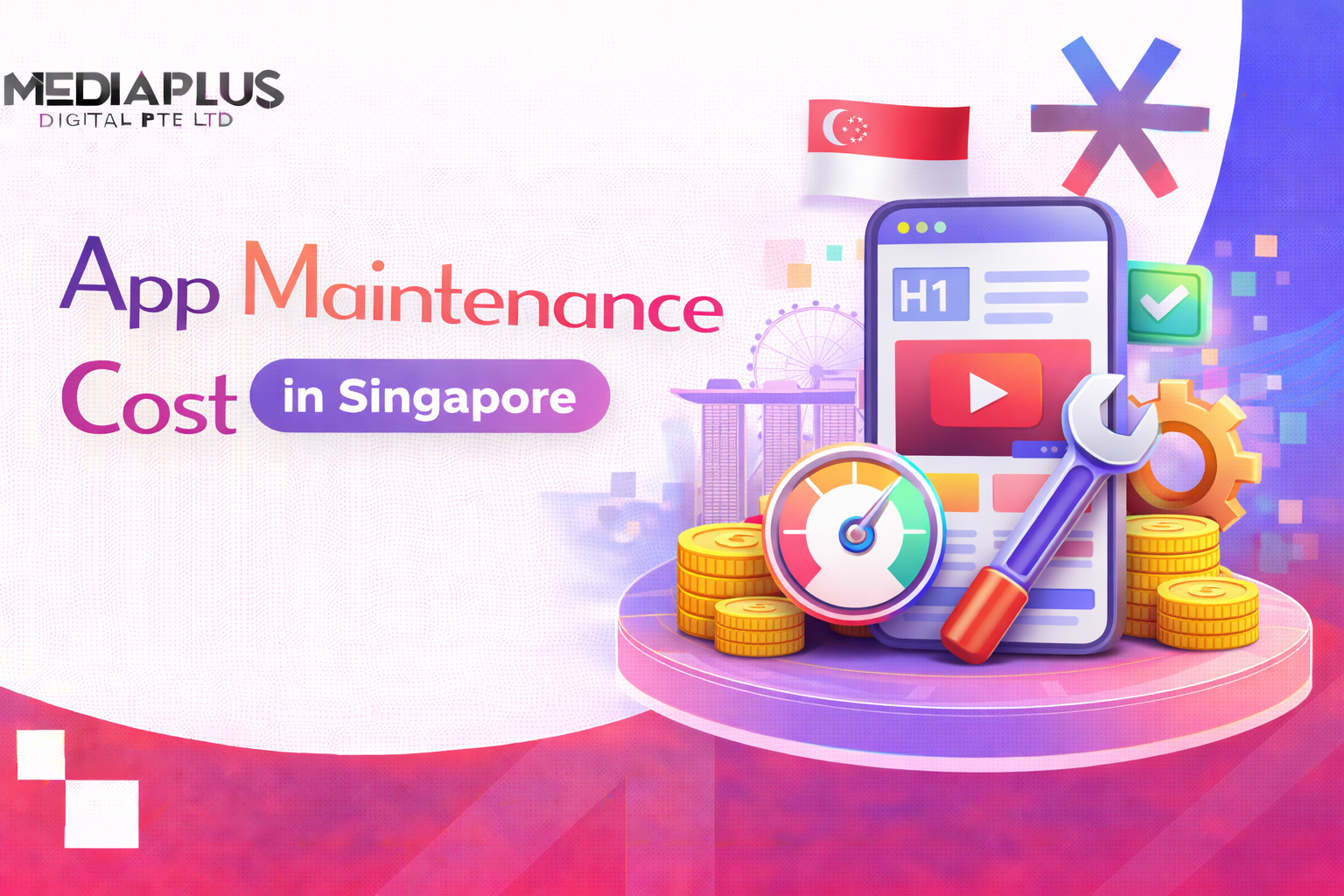
Launching your app is not the finish line. It is the starting line. After launch, your app needs continuous maintenance to stay functional, secure, compatible with new OS versions, and competitive in the market. Yet many businesses in Malaysia underestimate or completely overlook maintenance costs, leading to budget surprises and degrading app quality.
The industry standard is that annual app maintenance costs 15 to 35% of the original development investment. For a medium-complexity app that cost RM 200,000 to build, you should budget RM 30,000 to RM 70,000 per year for maintenance. This guide breaks down exactly what those costs cover, why they are necessary, and how to budget effectively for Malaysian businesses.
What Is App Maintenance?
App maintenance encompasses all activities required to keep your app functioning properly, secure, and competitive after launch. It is not just fixing bugs. Maintenance covers OS updates, server management, security patches, performance optimisation, and continuous improvements based on user feedback.
Five types of app maintenance:
- Corrective maintenance: Fixing bugs and errors reported by users or detected through monitoring. These are reactive fixes to problems that appear in production.
- Adaptive maintenance: Updating the app for compatibility with new OS versions (iOS and Android release major updates annually), new devices, and changes to third-party APIs and services.
- Preventive maintenance: Proactive code refactoring, performance optimisation, and technical debt reduction to prevent future problems.
- Perfective maintenance: Feature refinements, UX improvements, and enhancements based on user feedback and analytics.
- Emergency maintenance: Critical, unplanned fixes for security vulnerabilities, server outages, or show-stopping bugs that require immediate attention.
App Maintenance Costs in Malaysia: Detailed Breakdown
Annual Cost by App Complexity
|
App Complexity |
Development Cost (RM) |
Annual Maintenance (15 to 25%) |
Monthly Estimate (RM) |
|
Simple app |
50,000 to 150,000 |
RM 7,500 to 37,500 |
625 to 3,125 |
|
Medium app |
150,000 to 400,000 |
RM 22,500 to 100,000 |
1,875 to 8,333 |
|
Complex app |
400,000 to 1,000,000+ |
RM 60,000 to 250,000+ |
5,000 to 20,833+ |
Cost Breakdown by Category
|
Category |
Monthly Cost (RM) |
Annual Cost (RM) |
|
Hosting and infrastructure |
500 to 5,000 |
6,000 to 60,000 |
|
Bug fixes and updates |
1,000 to 8,000 |
12,000 to 96,000 |
|
OS compatibility updates |
500 to 3,000 |
6,000 to 36,000 |
|
Third-party API maintenance |
200 to 1,000 |
2,400 to 12,000 |
|
Security monitoring and patches |
500 to 2,000 |
6,000 to 24,000 |
|
Performance monitoring |
200 to 1,000 |
2,400 to 12,000 |
|
App store management |
100 to 500 |
1,200 to 6,000 |
|
SSL certificates and licences |
100 to 500 |
1,200 to 6,000 |
For a detailed understanding of initial development investment, review this guide on mobile app development cost in Malaysia.
What Each Maintenance Category Covers
Hosting and Infrastructure
- Cloud hosting: AWS, Google Cloud, or Azure server costs. Pricing scales with traffic, storage, and compute requirements. Most Malaysian apps start at RM 500 to 1,500 per month for moderate traffic.
- Database management: Database hosting, automated backups, and scaling as your data and user base grow.
- CDN services: Content delivery networks for serving media and assets quickly to users across Malaysia and the region.
- Auto-scaling: Configuring servers to handle traffic spikes (sales events, viral moments, seasonal peaks) without manual intervention or downtime.
Bug Fixes and Regular Updates
- User-reported bugs: Investigating and fixing issues reported through app reviews, support tickets, or crash monitoring tools.
- Feature updates: Adding new features, improving existing ones, and responding to competitive or market changes.
- Developer hours: A basic maintenance package typically includes 40 hours per month (approximately RM 4,000 to 8,000 depending on developer seniority). An advanced package with 80+ hours costs RM 8,000 to 16,000 per month.
OS and Device Compatibility
- iOS updates: Apple releases a major iOS version annually (typically September). Each update can break existing functionality, change UI standards, or deprecate APIs that your app relies on.
- Android updates: Google releases annual Android versions with new requirements. Google Play enforces target API level requirements that apps must meet to remain listed.
- New device support: New phone models with different screen sizes, aspect ratios, or hardware capabilities may require app adjustments. In Malaysia, the diversity of Android devices makes this particularly relevant.
Security
- Vulnerability patching: Addressing security vulnerabilities in your code, dependencies, and third-party libraries.
- Compliance updates: Malaysia’s Personal Data Protection Act (PDPA 2010) requires ongoing compliance. Changes in data protection regulations or enforcement may require app updates.
- SSL certificate renewal: Keeping your SSL certificates current for secure data transmission.
- Penetration testing: Periodic security audits to identify vulnerabilities before they are exploited. Especially critical for apps handling financial transactions or personal data.
Third-Party Services and APIs
- API changes: Payment gateways (iPay88, Billplz, Stripe), mapping services, social login providers, and other third-party APIs update regularly. Changes can break your app if not addressed promptly.
- Licence costs: Ongoing subscription fees for analytics tools, crash reporting, push notification services, and other SaaS tools your app depends on.
- Deprecated services: When a third-party service you rely on is discontinued or changes its pricing, you need to migrate to an alternative.
Performance Monitoring
- Crash monitoring: Tools like Firebase Crashlytics or Sentry track crashes in real-time and provide diagnostic data for fixing them.
- Performance analytics: Monitoring load times, API response times, and app responsiveness to identify and address performance degradation.
- User analytics: Tracking user behaviour to identify UX issues, feature adoption, and inform improvement priorities.
Factors That Affect Maintenance Costs in Malaysia
- App complexity: More features, integrations, and user interactions mean more potential points of failure and higher maintenance effort.
- Platform coverage: Maintaining apps on both iOS and Android costs more than a single platform. Hybrid apps (Flutter, React Native) reduce this cost through shared codebases.
- User base size: More users generate more support requests, more edge-case bugs, and require more server resources.
- Third-party dependencies: Each external API or service adds a maintenance responsibility. The more integrations, the higher the maintenance burden.
- Code quality: Apps built with clean architecture and well-documented code are significantly cheaper to maintain than apps with accumulated technical debt.
- Update frequency: Apps that release updates monthly require more maintenance budget than apps updating quarterly.
- Developer rates: Malaysian developers charge RM 50 to RM 200+ per hour depending on seniority and specialisation. Senior Flutter or React Native developers command higher rates.
- Regulatory compliance: Fintech apps regulated by Bank Negara Malaysia, healthcare apps, and government-related apps face stricter compliance requirements that increase maintenance costs.
Why Skipping Maintenance Is Risky
- App store removal: Both Apple and Google require apps to meet current target API levels and guidelines. Apps that are not updated risk being delisted from the App Store and Google Play.
- Security breaches: Unpatched vulnerabilities expose user data. Under Malaysia’s PDPA, organisations that fail to protect personal data face enforcement actions and reputational damage.
- Poor user reviews: Bugs that persist, features that break after OS updates, and slow performance lead to negative reviews that damage your brand and reduce downloads.
- Technical debt accumulation: Small issues that are not addressed compound over time. Eventually, the cost of fixing accumulated technical debt exceeds the cost of regular maintenance.
- Lost competitive advantage: Competitors who maintain and improve their apps continuously will attract users away from stagnant products. In Malaysia’s competitive app market, standing still means falling behind.
- Compatibility issues: With Malaysia’s diverse Android device market (Samsung, Xiaomi, OPPO, Vivo, Realme), untested OS and device updates can break functionality for significant user segments.
How to Reduce App Maintenance Costs
- Invest in quality development from the start: Clean, well-documented code with automated testing reduces maintenance effort significantly. Cutting corners during development always increases long-term costs.
- Choose hybrid over native when appropriate: A single hybrid codebase (Flutter or React Native) costs less to maintain than two separate native codebases. For most business apps, hybrid offers the best balance of performance and maintenance efficiency.
- Automate testing: Automated unit tests, integration tests, and UI tests catch regressions before they reach users, reducing emergency maintenance and bug-fix costs.
- Monitor proactively: Real-time crash monitoring and performance alerts allow you to fix issues before they impact many users, reducing the cost of reactive bug fixes.
- Plan updates strategically: Batch updates into scheduled monthly or quarterly releases rather than frequent hotfixes. This reduces deployment overhead, QA effort, and app store review cycles.
- Choose a maintenance partner early: Having a dedicated team that knows your codebase intimately is more efficient than onboarding new developers each time an issue arises.
App Maintenance Cost Estimation Methods
Top-Down Method
Budget a percentage of your initial development cost annually. This is the simplest approach and works well for early budgeting:
- Simple apps: 15 to 20% of development cost per year.
- Medium apps: 20 to 25% per year.
- Complex apps: 25 to 35% per year.
Bottom-Up Method
Sum the individual cost components for a more accurate estimate:
- Developer hours per month (based on expected workload and developer rate)
- Hosting and infrastructure costs
- Third-party service subscriptions
- QA and testing effort
- Planned OS and API adaptation work
- Add 10 to 15% contingency for unplanned issues
The bottom-up method provides a more accurate estimate but requires detailed planning and knowledge of your app’s specific maintenance requirements.
Choosing a Maintenance Partner in Malaysia
When selecting a team for ongoing app maintenance, evaluate:
- Familiarity with your codebase: The team that built your app is usually the most efficient for maintaining it. Onboarding new developers to an unfamiliar codebase takes time and increases costs.
- Response time SLAs: Agree on response time commitments for different severity levels. Critical issues should be addressed within hours, not days.
- Monitoring tools: Ensure your maintenance partner uses proactive monitoring (crash analytics, server health, performance dashboards) rather than waiting for users to report problems.
- Transparent reporting: Monthly reports showing maintenance activities, hours spent, issues resolved, and upcoming maintenance needs.
- Scalability: Your maintenance needs will grow as your app gains users. Choose a partner that can scale support accordingly.
- Local understanding: A Malaysian-based team understands the local device landscape, payment gateway ecosystem, and regulatory requirements (PDPA, Bank Negara guidelines) that affect your app.
For a complete picture of app development investment, review the complete guide to mobile app development in Malaysia.
Keep Your App Running at Its Best
App maintenance is not an optional expense. It is an ongoing investment that protects the value of your development investment, keeps your users happy, and ensures your app remains competitive in Malaysia’s fast-growing mobile market.
MediaPlus Digital provides end-to-end app maintenance and support services for businesses across Malaysia. From bug fixes and OS updates to performance optimisation and feature enhancements, the team keeps your app running smoothly. As part of comprehensive mobile app development services and website maintenance services, maintenance plans are tailored to your app’s complexity and user base.
Need reliable app maintenance in Malaysia? Contact MediaPlus Digital for a customised maintenance plan.